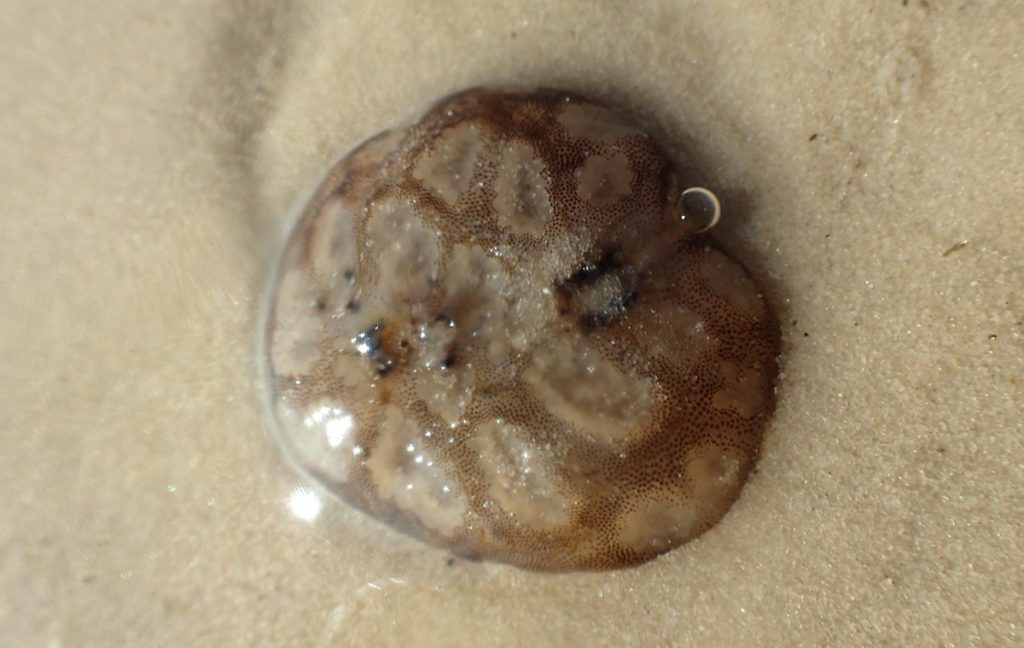
Bay Mouth Bar is a series of sand bars and seagrass beds at the mouth of Alligator Harbor. For just a few days a month, the tide is low enough for it to be exposed for a couple of hours. When that happens, you can see an incredible diversity of life, including a higher diversity of predatory snails than anywhere else in the world. That’s what attracted Dr. Robert Paine to the area in the late 1950’s, as he was forming his ideas about keystone species and food webs. More recently, Dr. David Kimbro and his lab repeated surveys and found that there have been a few changes in the last fifty years. David’s doctoral student, Tanya Rogers, is conducting further research into whether the removal of one of Bay Mouth Bar’s top predators played a role in these changes.
In this Google Map, you can see the submerged sand off the tip of Alligator Point. During extreme low tides associated with full moons, much of this sand flat/ seagrass bed environment can become exposed.
Contents
- Foundations Species- Seagrass species of Bay Mouth Bar
- Top Predatory Snails
- Other Predatory Snails
- Other Snails
- Bivalves
- Other Invertebrates
Foundation Species
The beds at Bay Mouth Bar are made up of three different types of seagrass. Of interest to David and Tanya is the effect of predators on the grass. The larger predatory snails eat the smaller predators, who eat primarily clams and other bivalves. Those bivalves filter the water around the seagrass beds, taking nitrogen out of the water column and depositing in the sand, where the grasses make use of it. An imbalance in this relationship (such as the disappearance of a top predator species, such as the true tulip) might affect the clams, mussels, and scallops, which in turn might prevent nutrients from reaching the grasses.
Turtle grass (Thalassia testudinum)
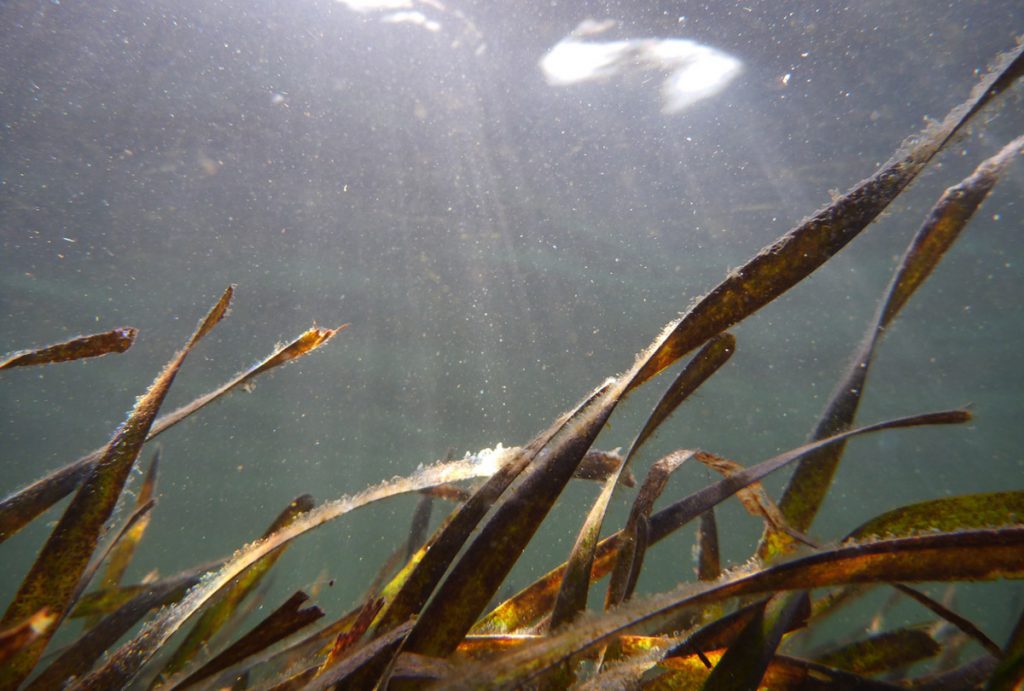
Turtle grass is Florida’s most important seagrass species for habitat formation. It derives its name from the sea turtles that eat it. It is also eaten by several fish species and sea urchins.
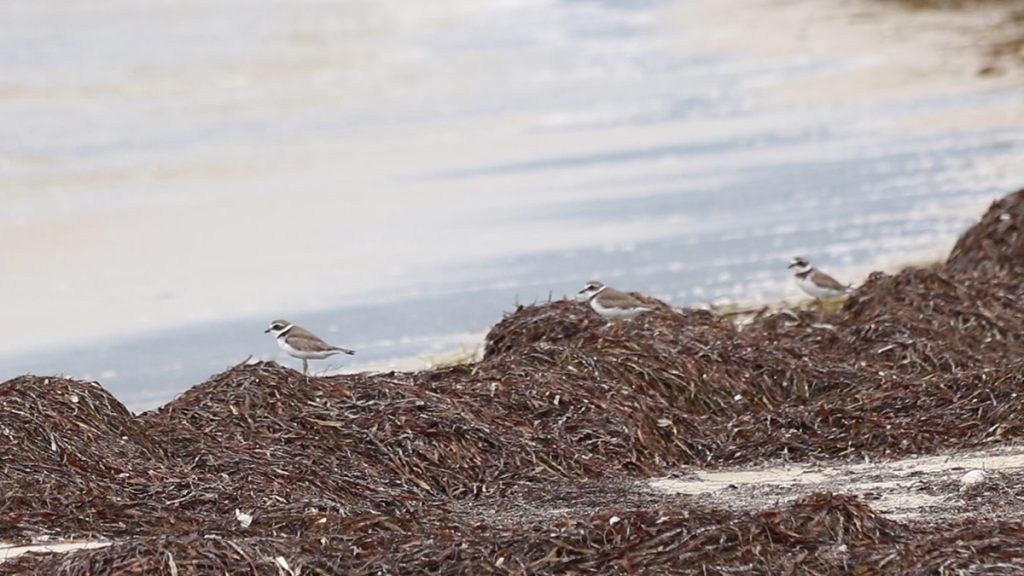
Seagrass beds are one of the world’s most efficient carbon sinks. In the winter, turtle grass blades slough off, landing in mats along the shore called seagrass wrack.
Shoal grass (Halodule wrightii)
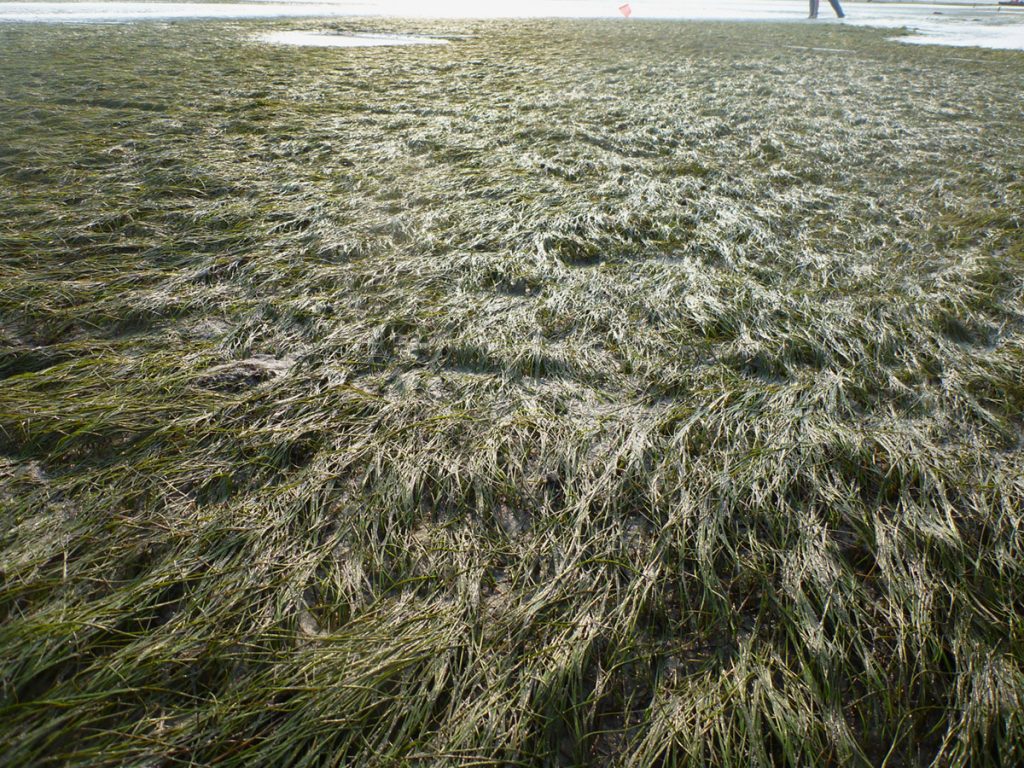
Shoal grass is one of the dominant seagrass species in Florida. It is usually found growing in shallow water and can tolerate prolonged periods of exposure during low tide.
Manatee grass (Syringodium filiforme)
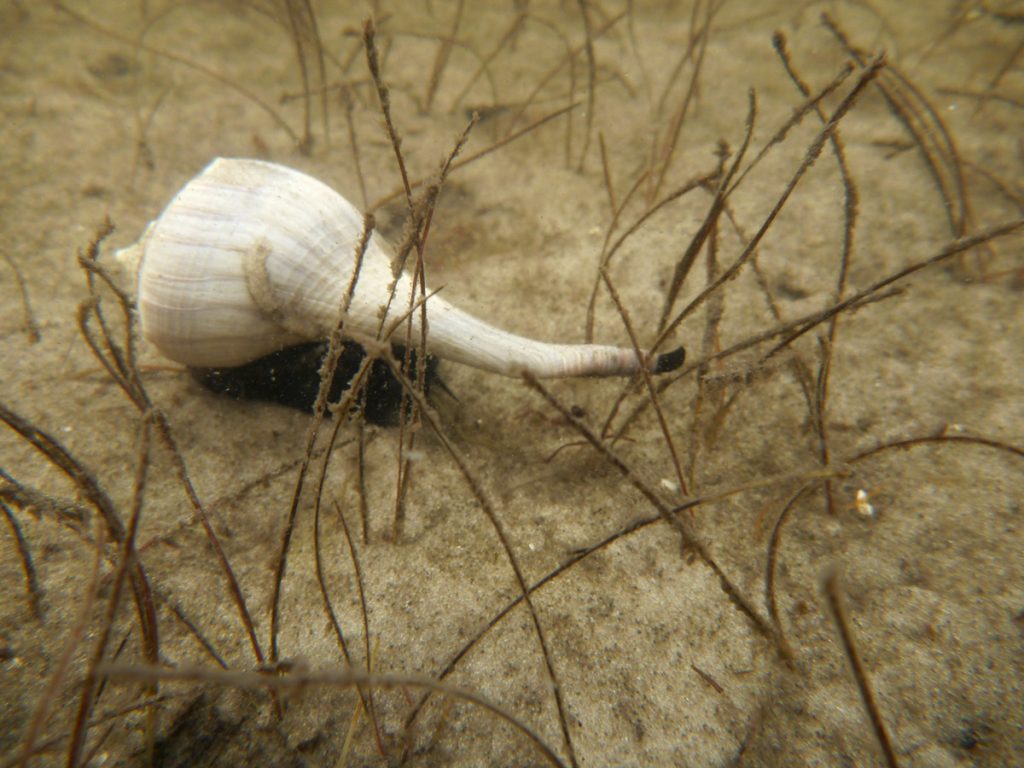
Manatee grass is commonly found in mixed seagrass beds.
Top Predators
When Dr. Paine surveyed Bay Mouth Bar in the 1950s, there were two top predators, depending on the season. For most of the year, this was and still is the horse conch. When the horse conch left for deeper waters in the winter, the true tulip (a species consumed by the horse conch) became to top predator. When David and his crew first surveyed the bar in 2011, however, they found that true tulips had disappeared.
Horse conch (Triplofusus giganteus)
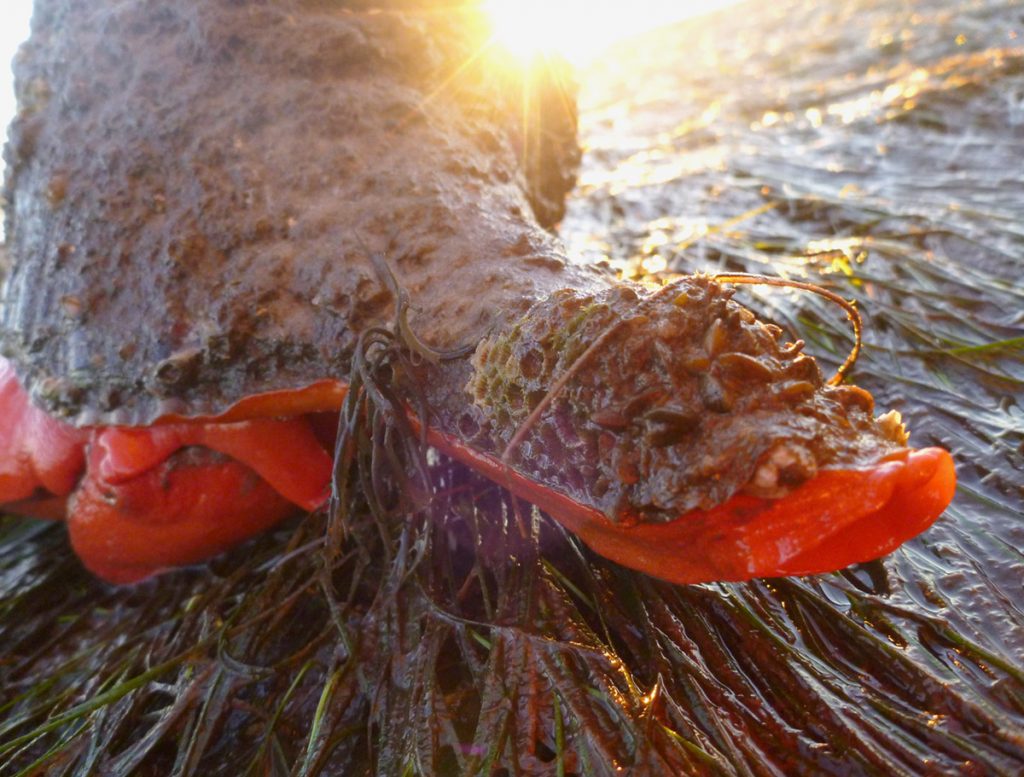
Not a true conch, this large snail is a predator in the lower intertidal and subtidal zones. It feeds on other gastropods, such as lightning whelks and tulip snails, as well as pen shells. The horse conch is the official state seashell of the state of Florida.
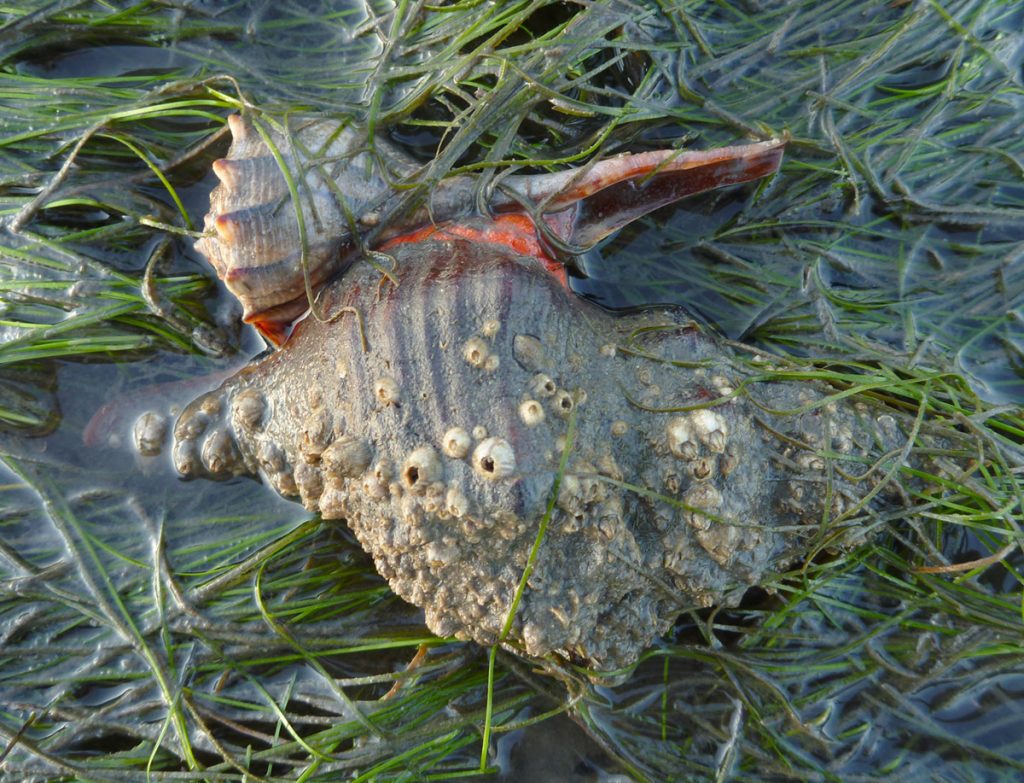
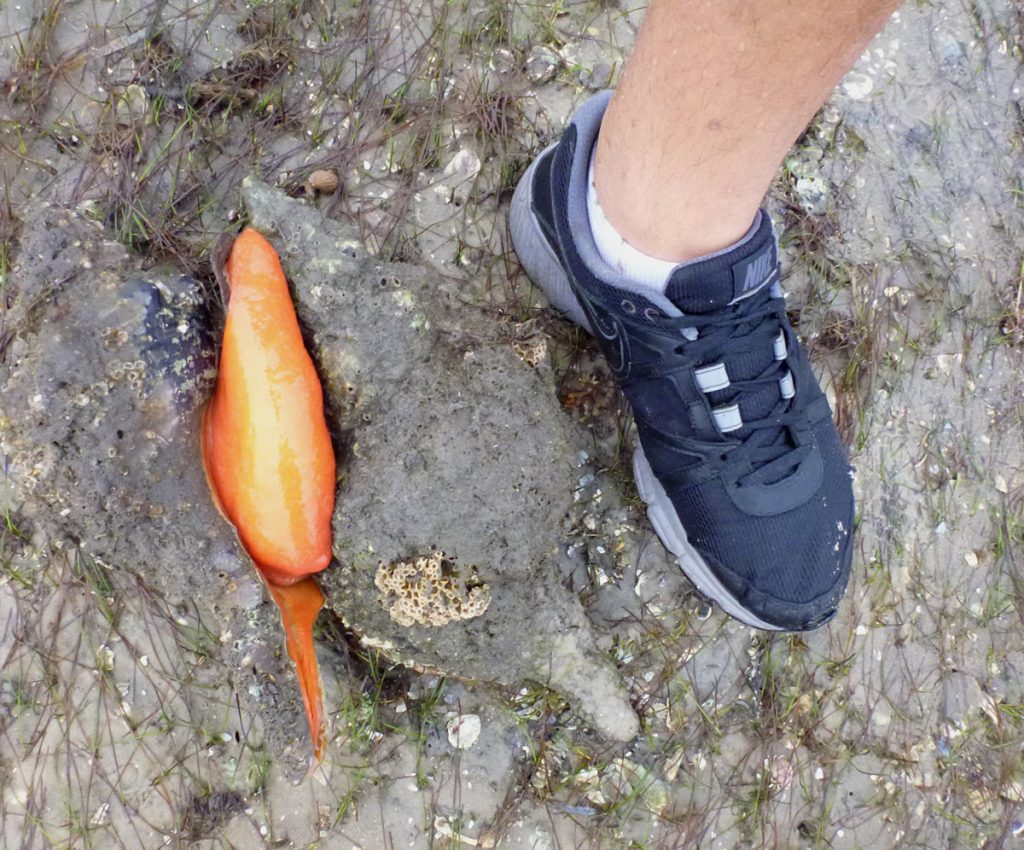
The horse conch is the largest predatory snail in Florida waters. It places the bulk of its body on the operculum of the prey snail, preventing the prey from being able to withdraw inside its shell. The horse conch then uses its relatively large proboscis to consume the prey’s flesh.
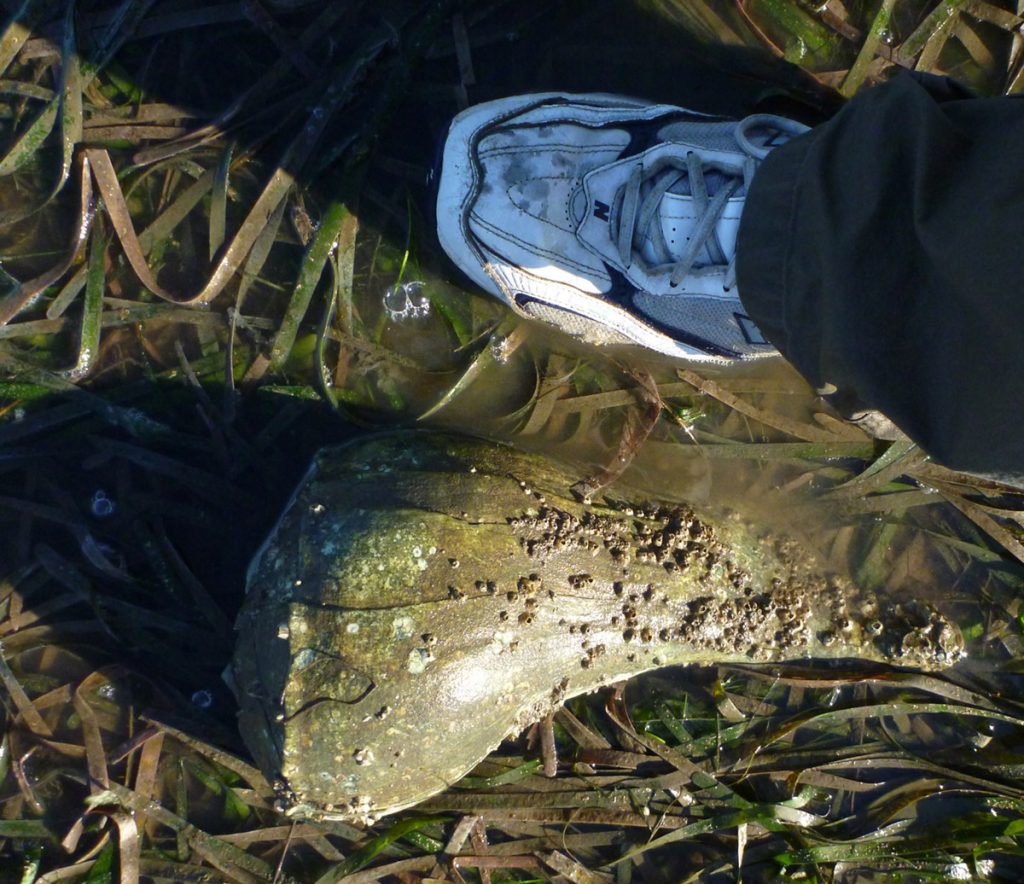
You may notice the multitude of organisms growing on the shell of the conchs at Bay Mouth Bar. These include barnacles, bryozoans, and oysters. For comparison, take a look at a horse conch from Saint Joseph Bay, which has no fresh water input from rivers. As a result, its water is clearer, and it lacks oysters and other organisms associated with sediment filled water:

Horse Conch (Triplofusus giganteus) in Saint Joseph Bay. Horse conch on Bay Mouth Bar.
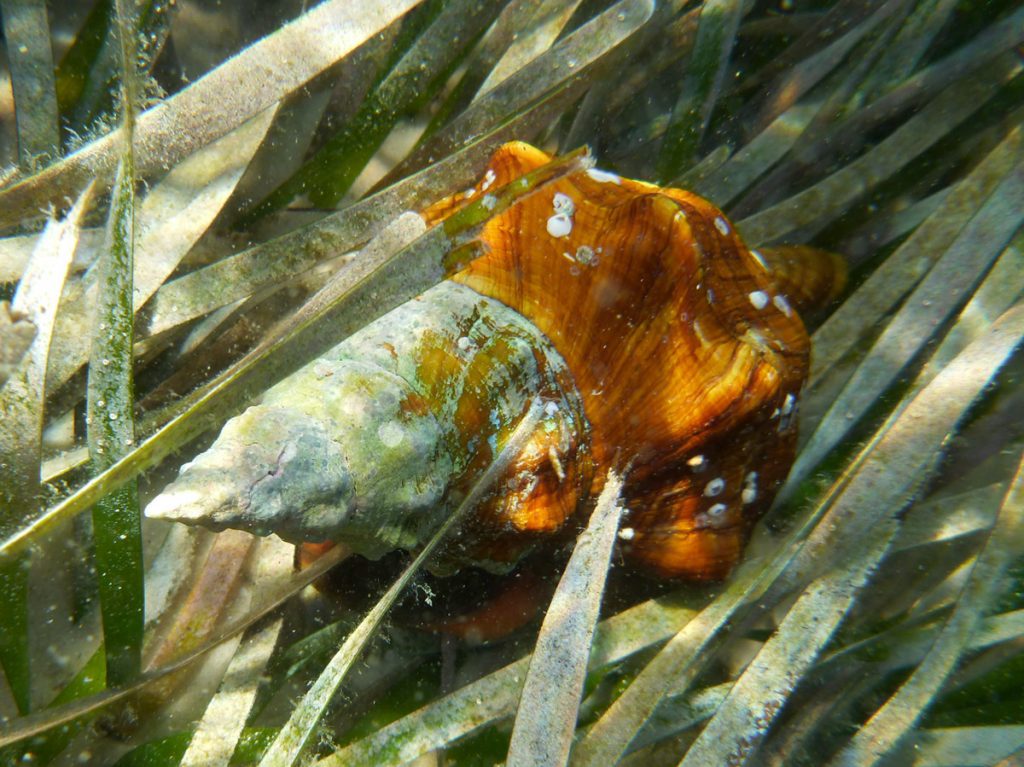
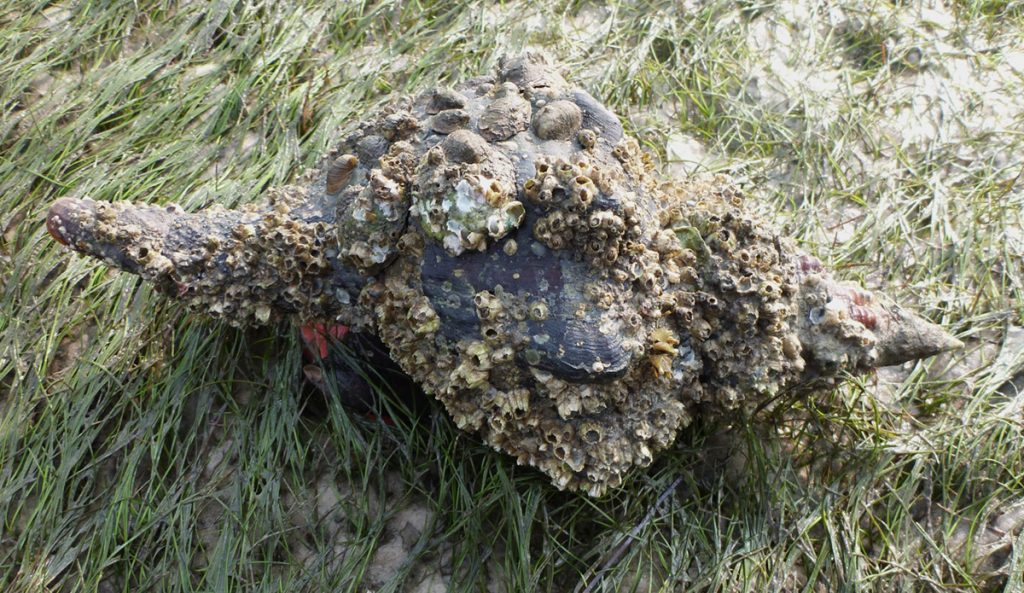
As mentioned above, in the winter months, horse conchs leave Bay Mouth Bar for deeper waters. In November 2013, David and his crew spotted several mating pairs on the edge of the seagrass beds facing the gulf. Perhaps horse conchs mate before leaving, and lay their eggs in deeper waters?
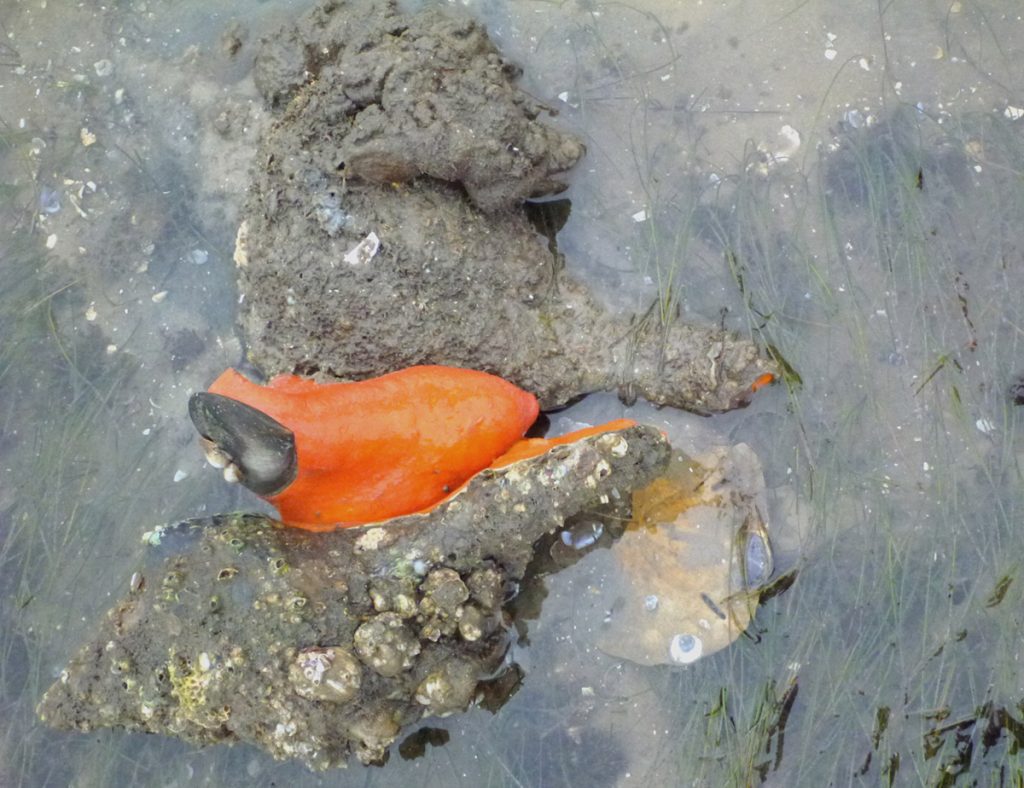
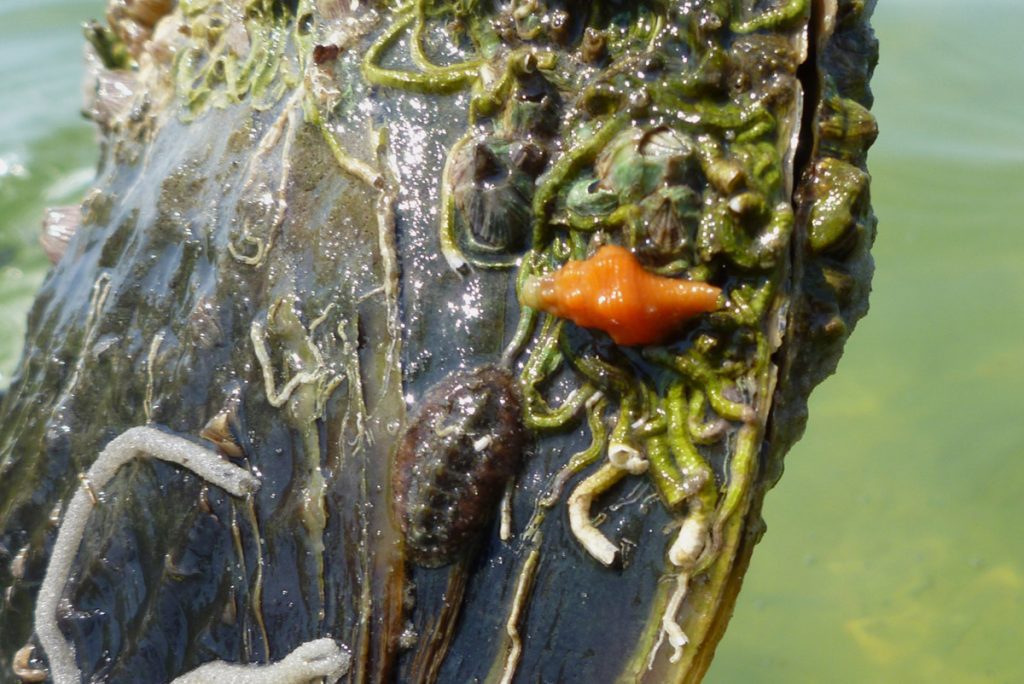
Below is a young horse conch on a pen shell found in Saint Joseph Bay. These large bivalves are the only clams eaten by hose conchs.
Lastly, here is a photo with a mens size thirteen shoe next to a horse conch, for scale:
True tulip (Fasciolaria tulipa)
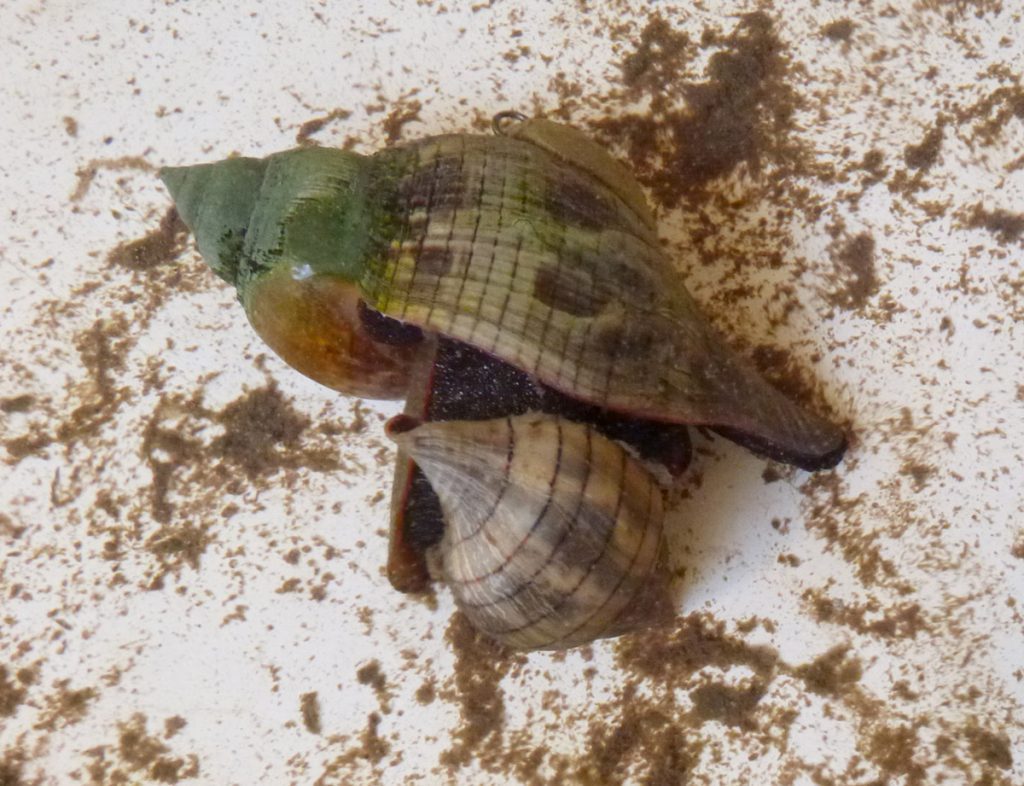
A predatory snail found in mud/ sand flats and seagrass beds. Tulips were once a primary predator of Bay Mouth Bar, but are no longer found in that community. As a top predator, these snails were second only to the horse conch, feeding on other snails and bivalves. The horse conch was its main predator on Bay Mouth Bar.
True Tulips are distinguished from Banded Tulips primarily by the lines on their shells. Adult Tulips have 25-38 interrupted lines along their shells, while Banded Tulips have 4-8 unbroken lines. Read more about an experiment being conducted by Tanya Rogers on the loss of predatory diversity on Bay Mouth Bar here.
Other Predatory Snails
These snails eat bivalves and smaller snails. As consumers of clams and mussels, they can influence how water is filtered around Bay Mouth Bar, and how nutrients are removed from the water column and deposited among the roots of seagrasses. Larger predators, such as hose conchs, play an important role in keeping these smaller predators in check, allowing bivalves to provide their ecosystem services.
Banded tulip (Cinctura lilium)
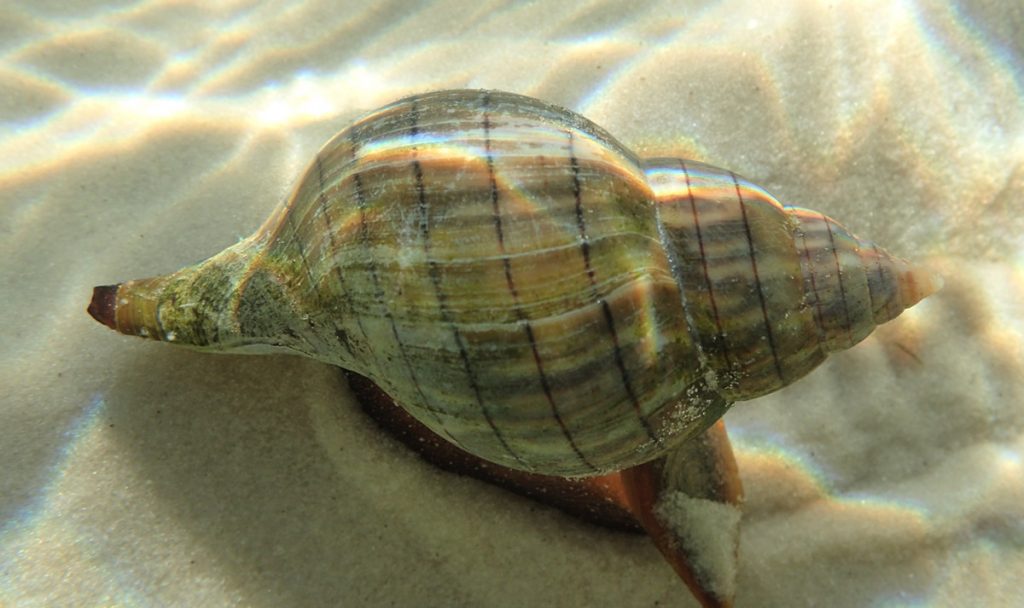
The Banded Tulip is a predator snail that feeds on a variety of prey including small snails, bivalves, tube worms, and carrion. True Tulips are distinguished from Banded Tulips primarily by the lines on their shells. Adult Tulips have 25-38 interrupted lines along their shells, while Banded Tulips have 4-8 unbroken lines.
Lightning whelk (Busycon perversum, Sinistrofulgur perversum)
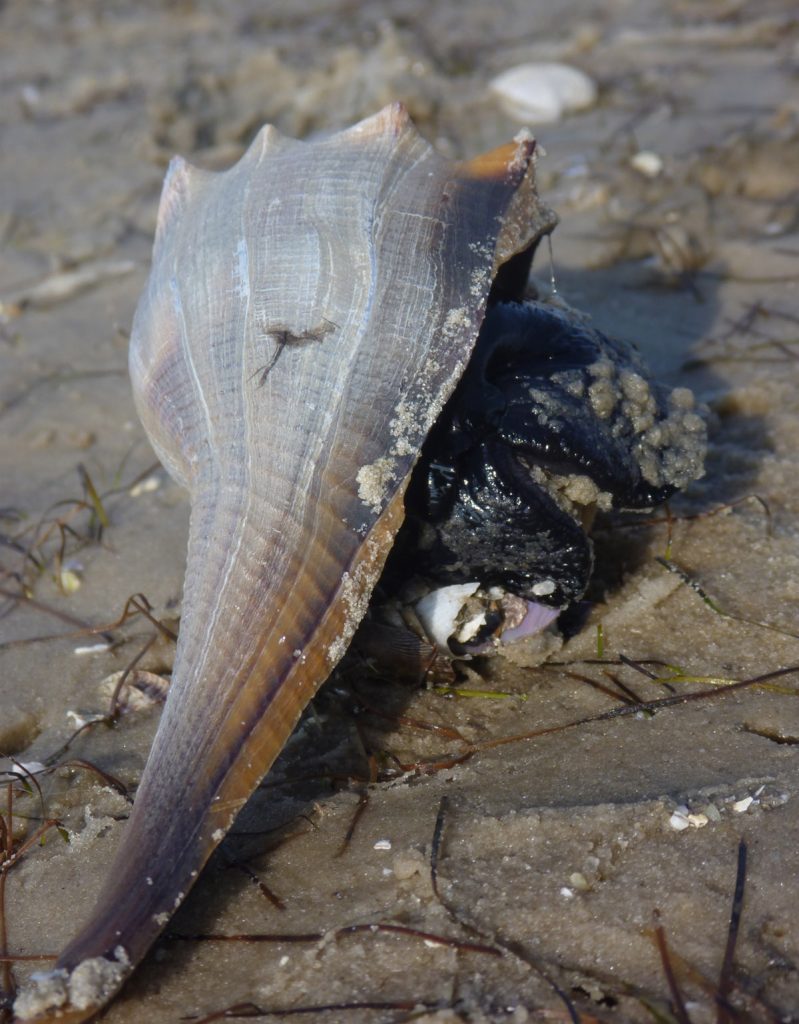
Like the crown conch, the lightning whelk uses its proboscis to pry bivalves open and suck out the flesh. Its proboscis is slender compared with that of a conch, and so it doesn’t have the force to pry open oyster shells, eating instead clams and mussels. While they get fairly large compared to other predatory snails found in Florida waters, they do not consume other snails and are themselves consumed by tulip snails and horse conchs.
These whelks can be easily confused for knobbed whelks, with which it shares many characteristics. The best way to visually differentiate the two is by identifying on which side it curves. Lightning whelks curve on the left (sinistral) side, knobbed whelks on the right (dextral). This elegant curve gave the whelks particular value to Florida’s native Apalachee people and their counterparts in other Mississippian cultures. You can read more about whelks and the Apalachee here.
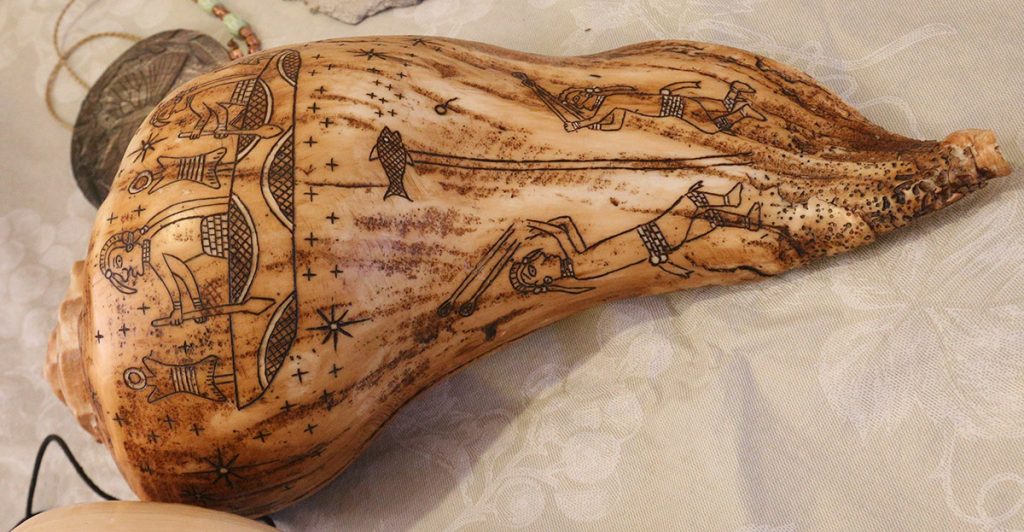
Muscogee culture is related to that of the Apalachee; hailing from nearby along the Chattahoochee River in Georgia and Alabama. In 2018, we saw how Muscogee living in Tallahassee keep their culture alive, which includes the carving of medicine cups from lightning whelks.
Lace murex (Chicoreus florifer)
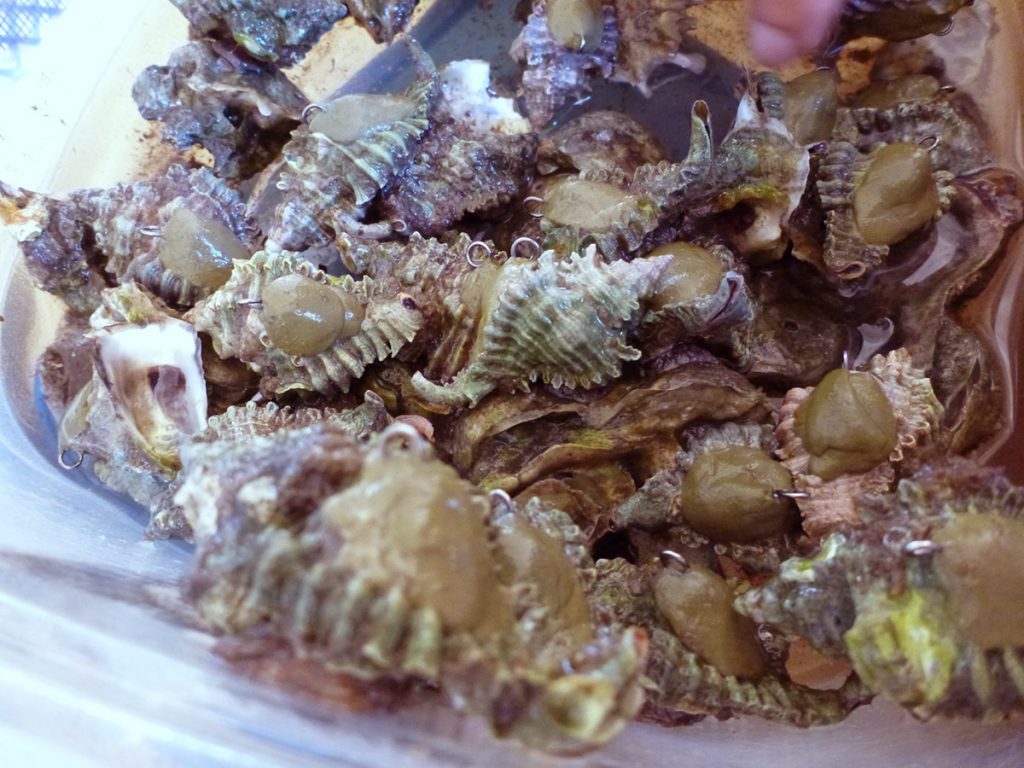
The Murex is one of the predatory snails that has disappeared from Bay Mouth Bar. A drilling predator, the Murex is a specialist, feeding on bivalves, particularly cross-barred venus.
Read more about an experiment being conducted by Tanya Rogers on the loss of predatory diversity on Bay Mouth Bar here.
Pear Whelk (Busycotypus spiratus)
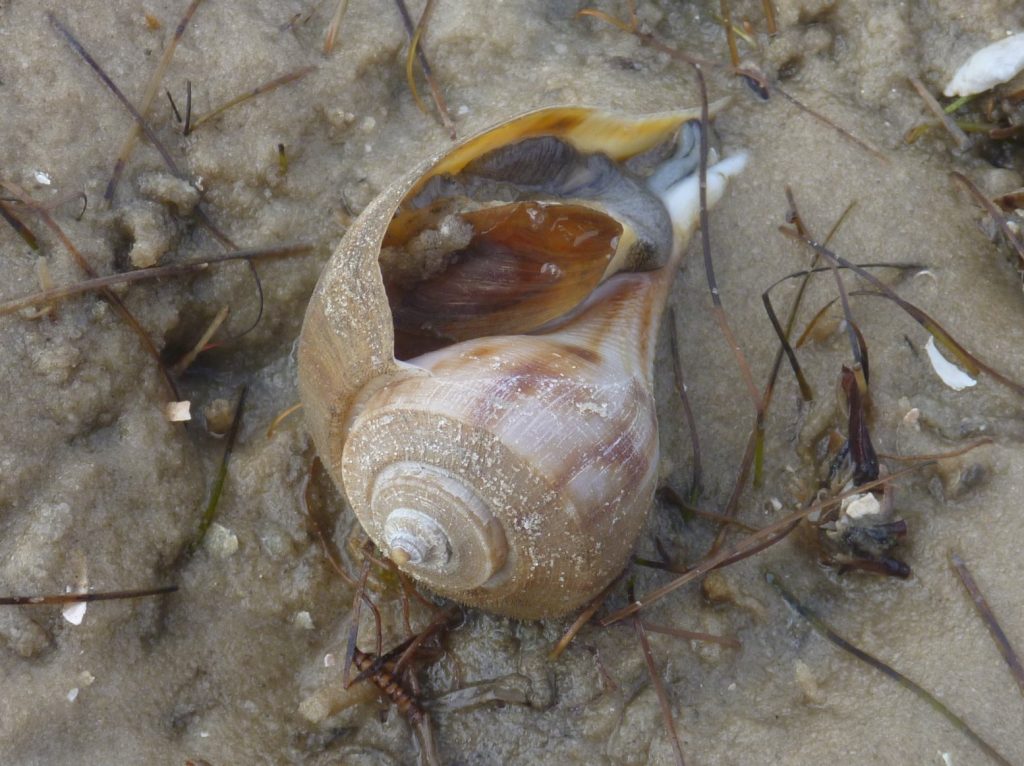
Pear whelks feed on bivalves and small snails, such as moon snails and turban snails.
White baby ear (Sinum perspectivum)
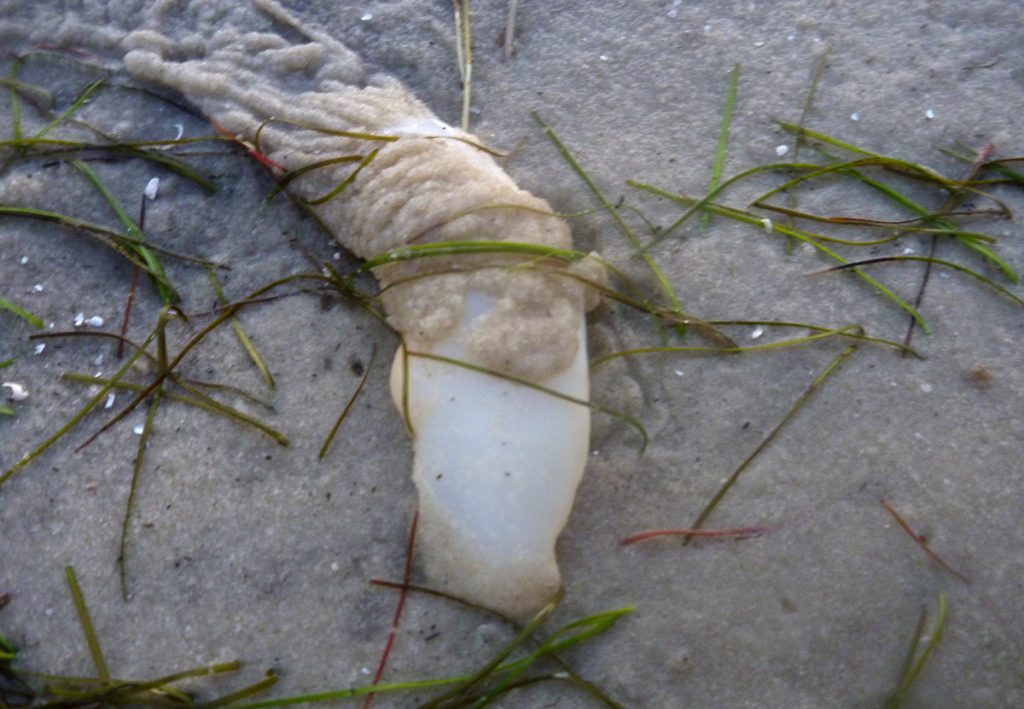
The White Baby Ear is a drilling predator that feeds on bivalves. Like the moon snail, the white baby ear burrows down into the sediment and can extend its body outside of its shell to nearly cover it. Unlike the moon snail though, it cannot completely retract its body inside its shell.
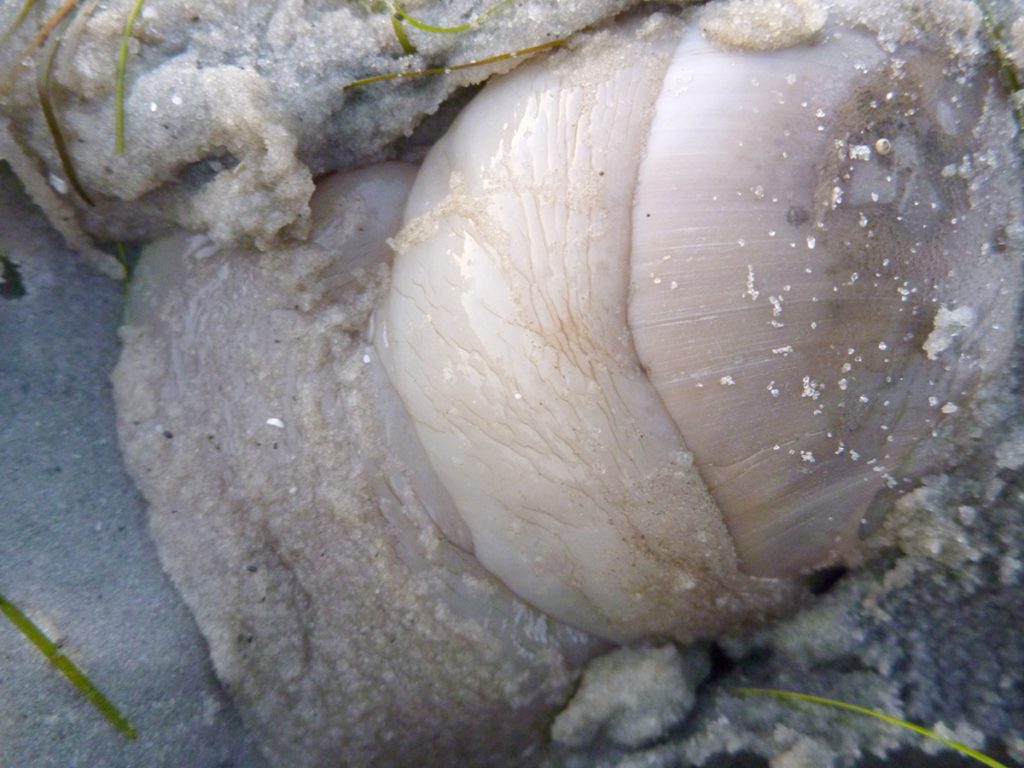
Atlantic moon snail (Neverita duplicata), also known as shark eye
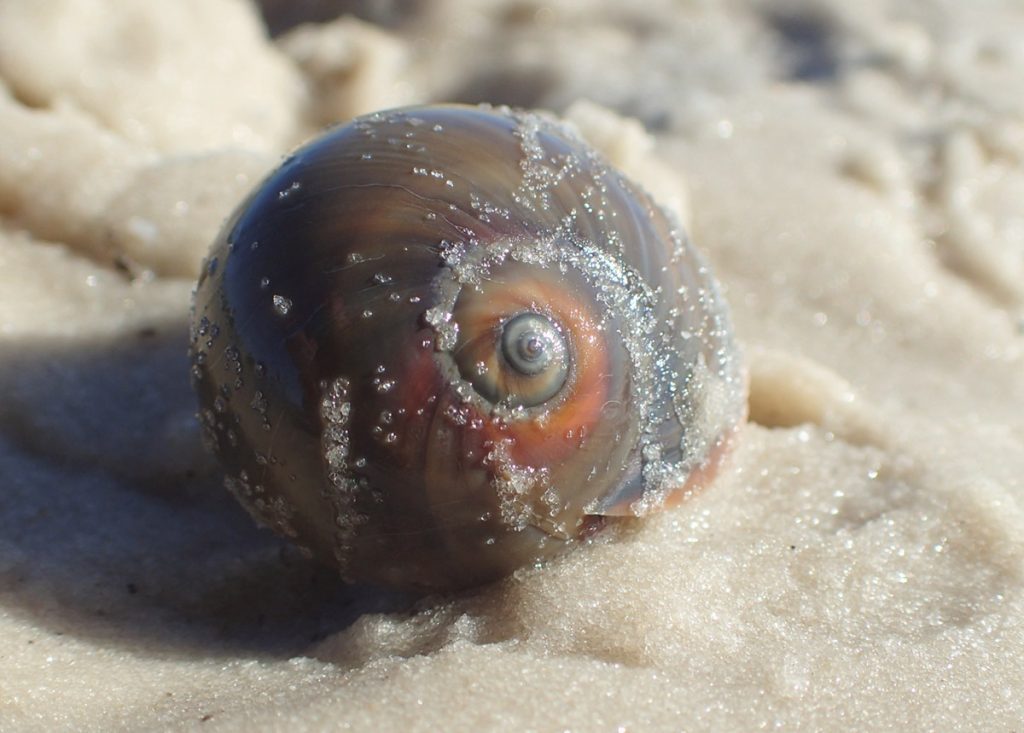
Moon snails burrow in the sand flats, looking for its prey. Once its meal is found, the moon snail envelops it, secreting acid until the prey is soft enough for the snail to pierce with its radula. These snails are drilling predators and feed primarily on bivalves. The body of a moon snail can extend outside of its shell and almost completely cover it, but can be retracted completely inside when disturbed.
Other Gastropods (Snails)
Bruised nassa (Phrontis vibex)
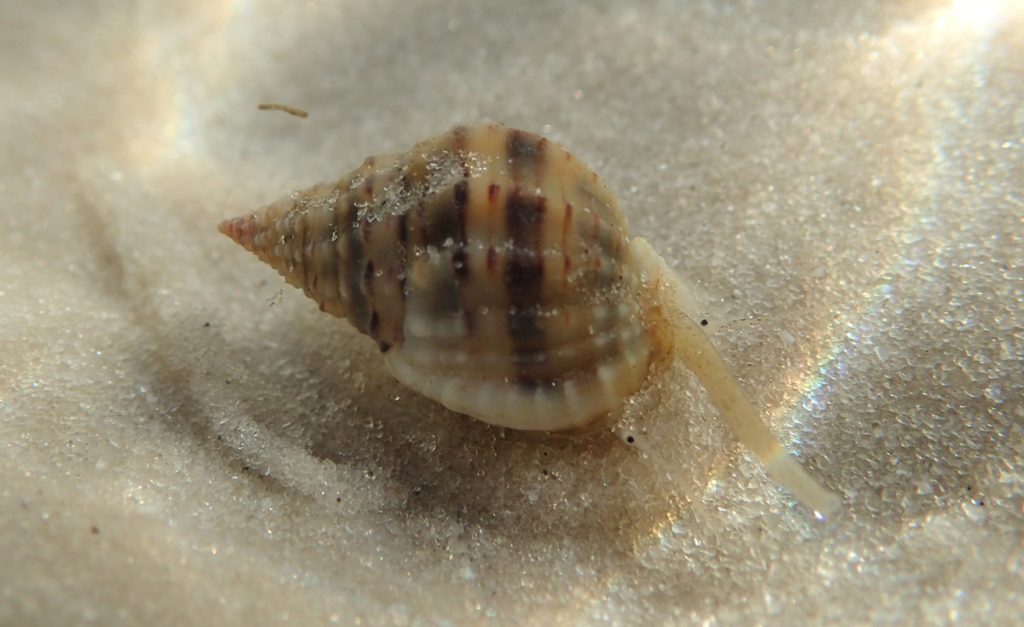
These scavengers are generally known as “mud snails”. They have a long siphon with which they can smell food from long distances away.
Chestnut turban (Turbo cataneus)
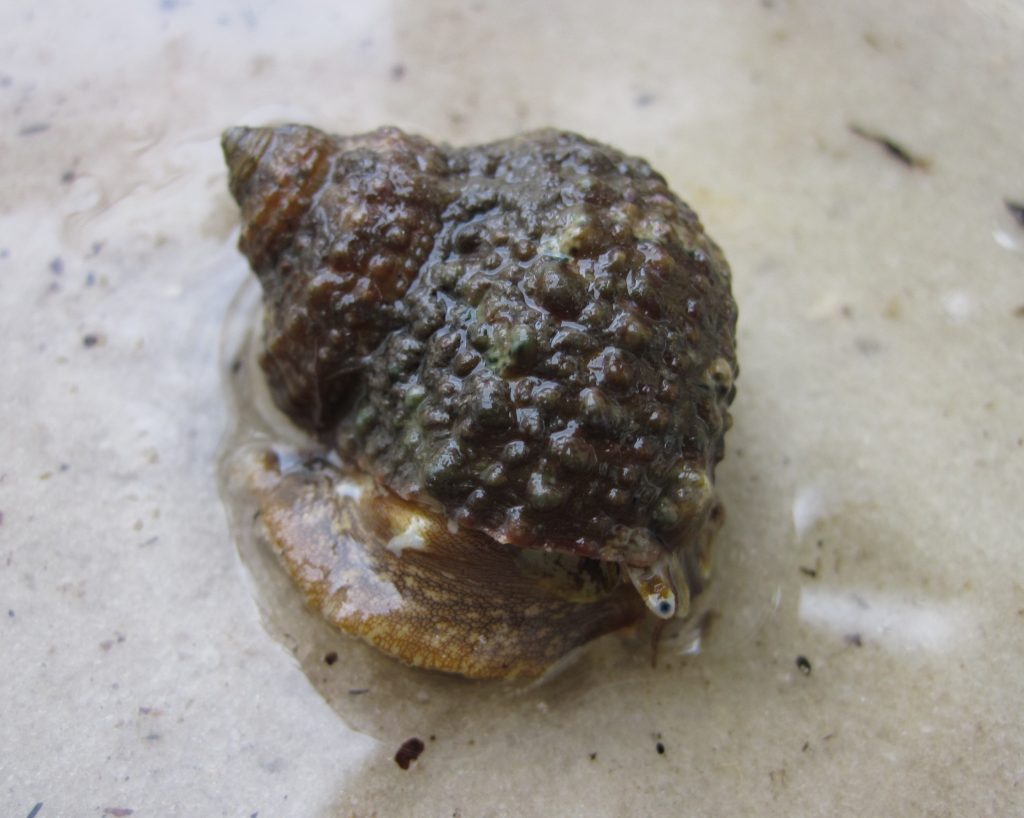
Gulf oyster drill (Urosalpinx perrugata)
Common Atlantic Marginella (Prunum apicinum)
Bivalves
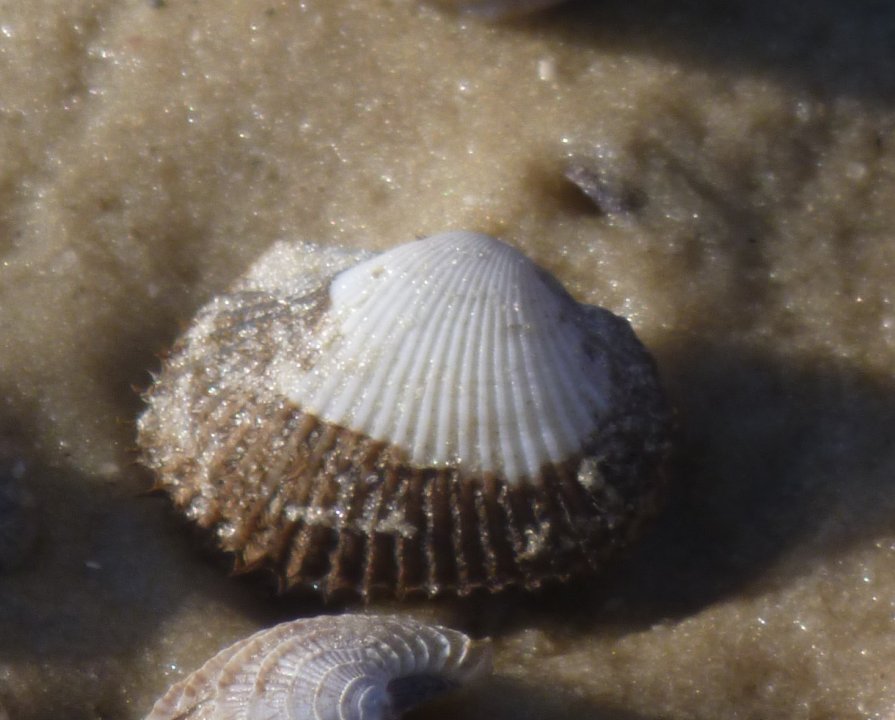
Ark clam (Andara sp.)
Bay scallop (Argopecten irradians)
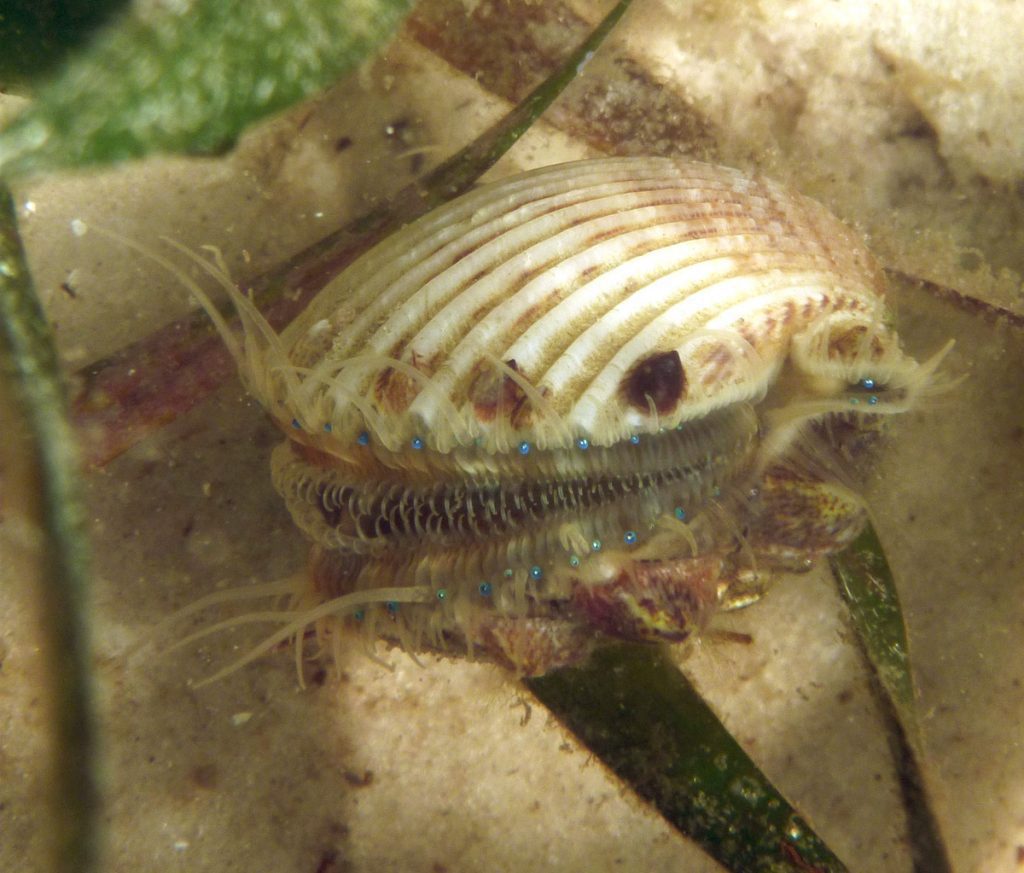
Scalloping is a popular recreational activity in summer months, when scallops populations are sufficient to support the harvest. Check Florida Fish and Wildlife’s for current information on this year’s harvest in each gulf coast region.
In recent years, Saint Joseph Bay’s low scallop populations have cancelled or limited the recreational scallop seasons there. When they were more plentiful in 2014, we went in search of the tasty mollusks.
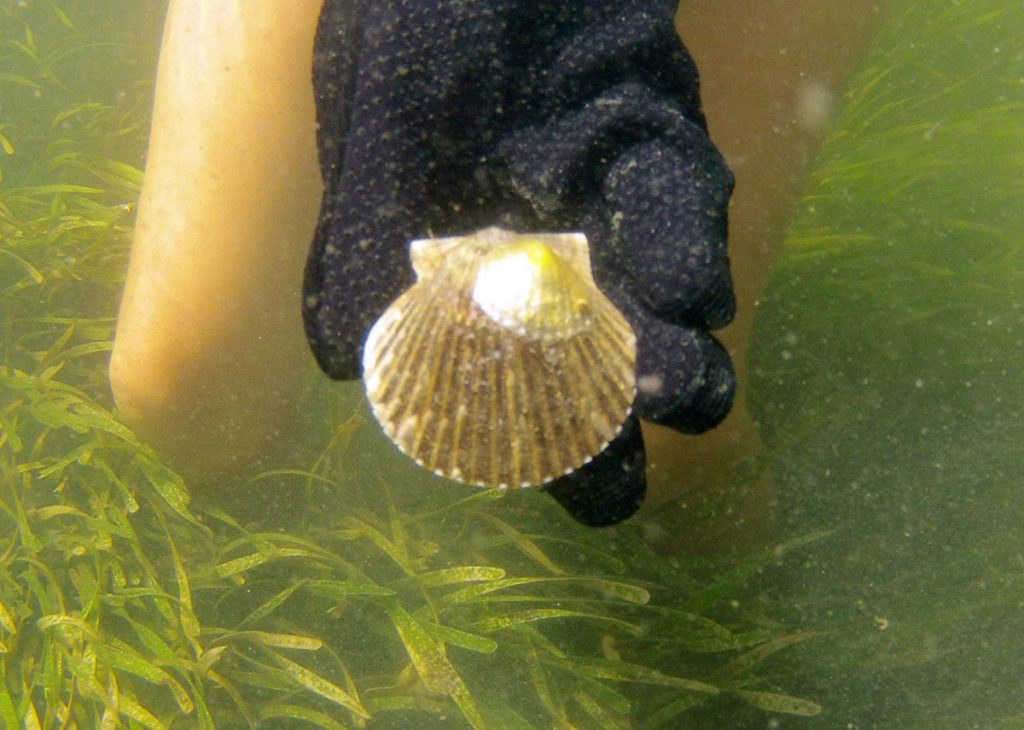
Broad-ribbed carditas (Cardites floridana)
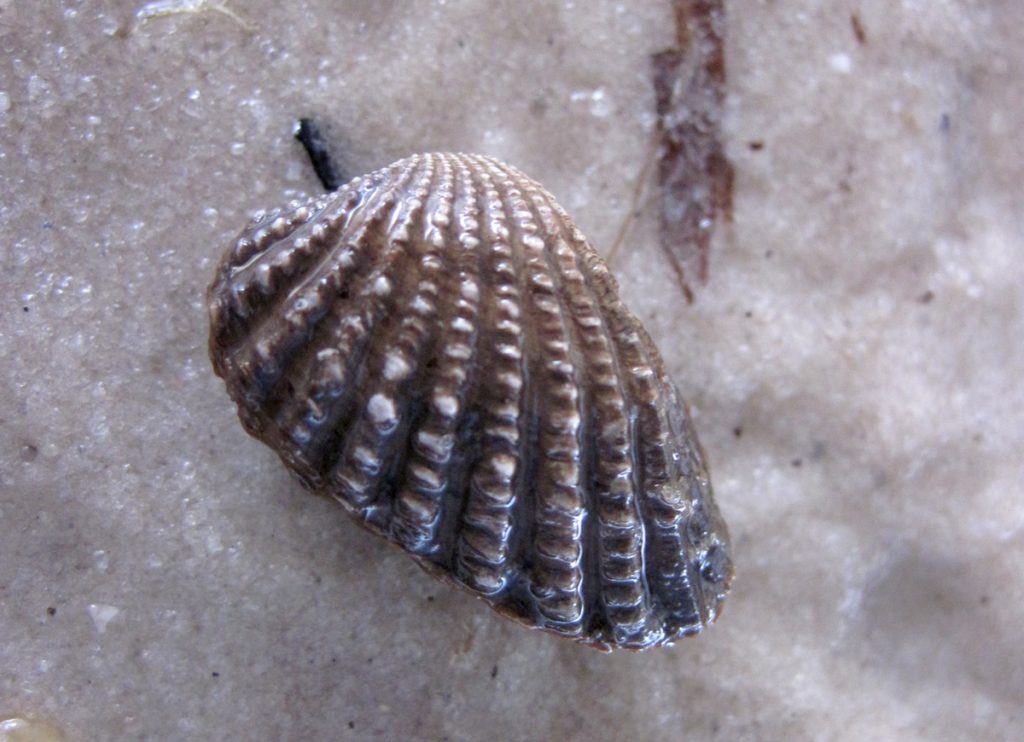
Cross-barred Venus (Chione cancellata)
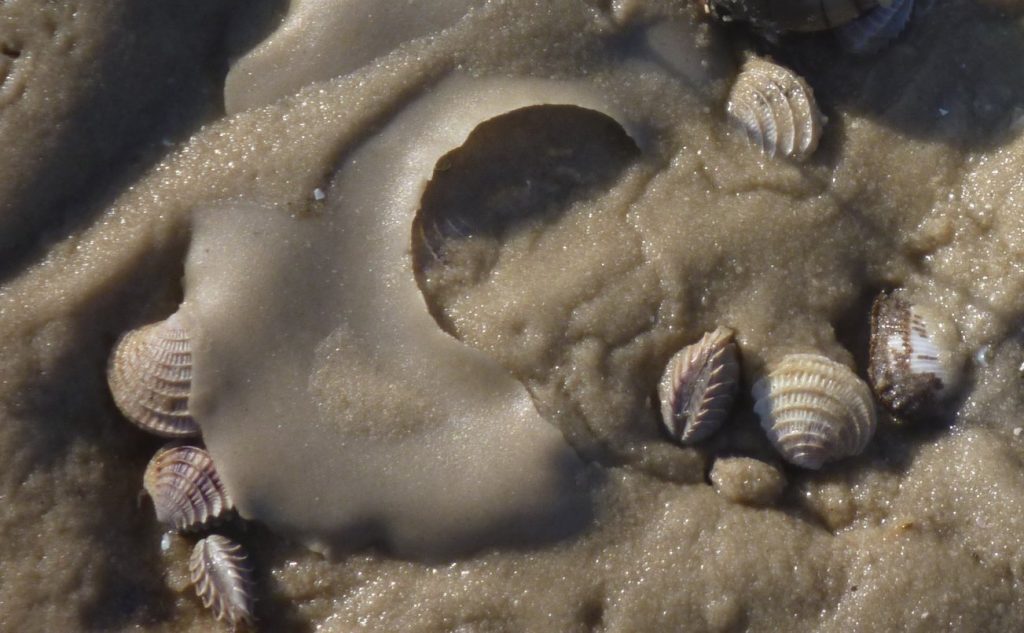
Florida prickly cockle (Trachycardium egmontianum)
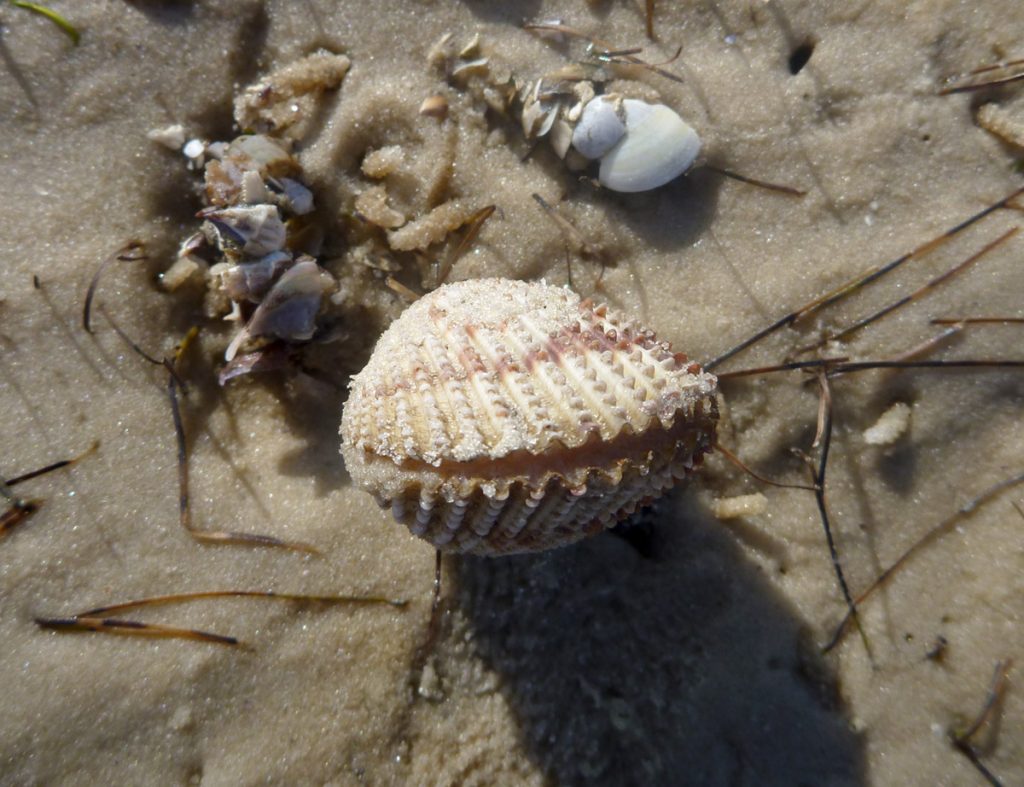
Pen shell (Atrina sp.)
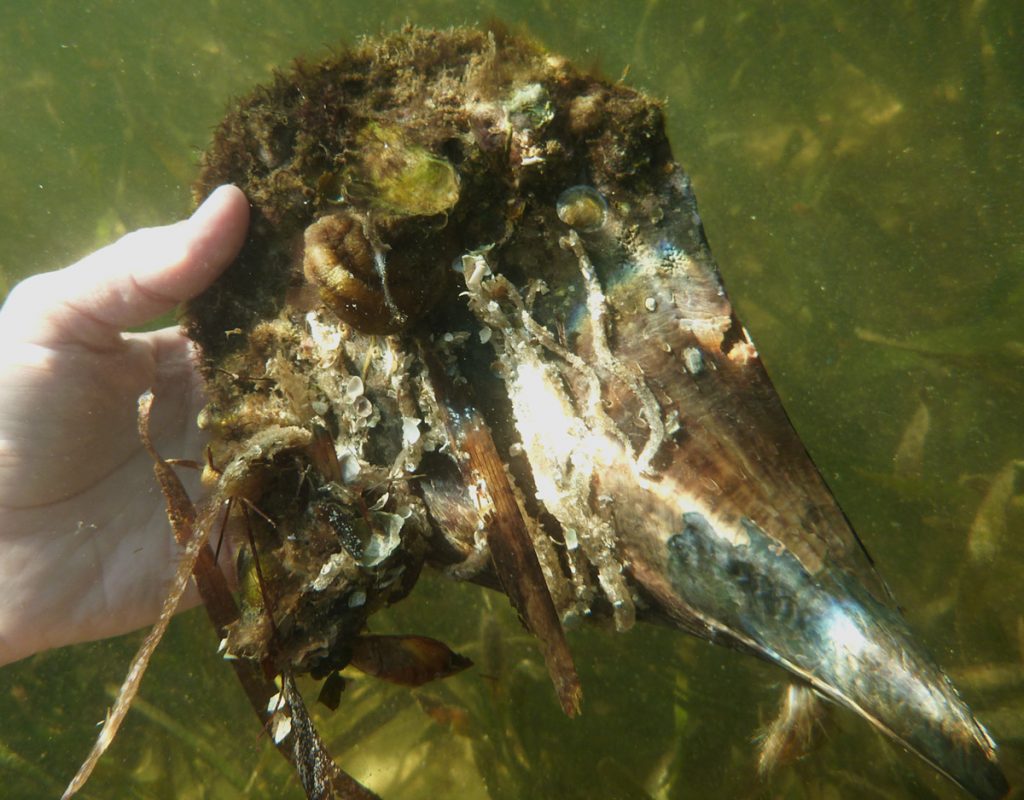
The largest clam on Bay Mouth Bar, it is the only bivalve consumed by horse conchs.
Southern horse mussel (Modiolus squamosus)
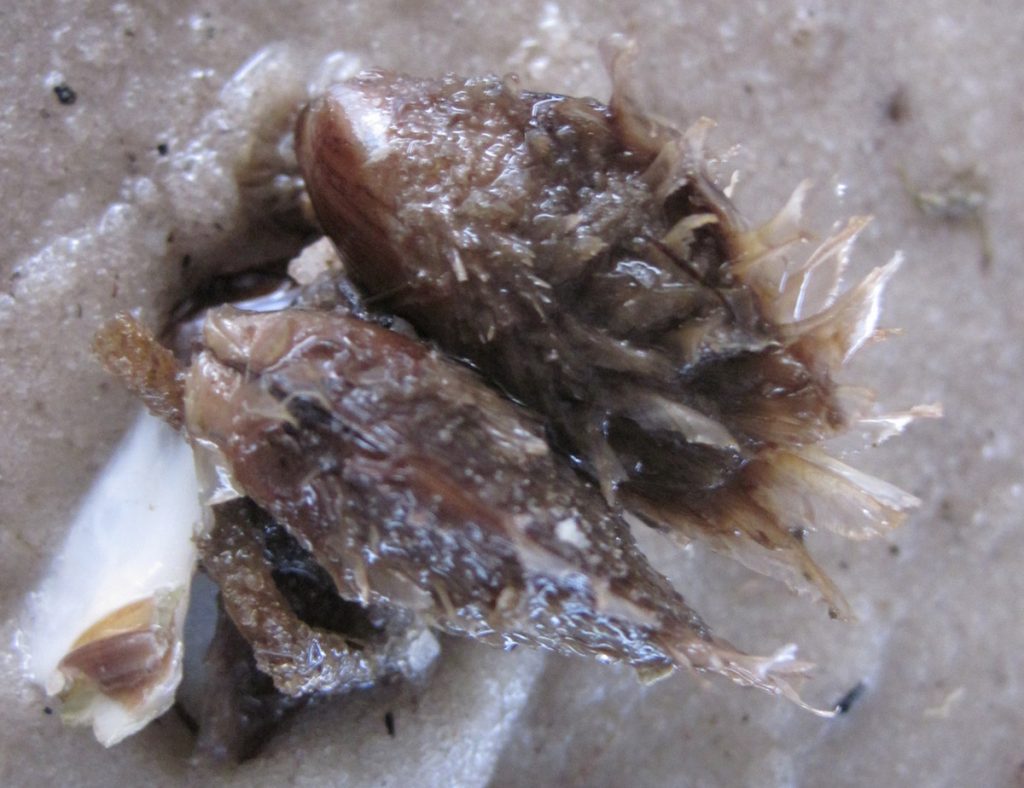
Southern quahog (Mercenaria campechiensis)
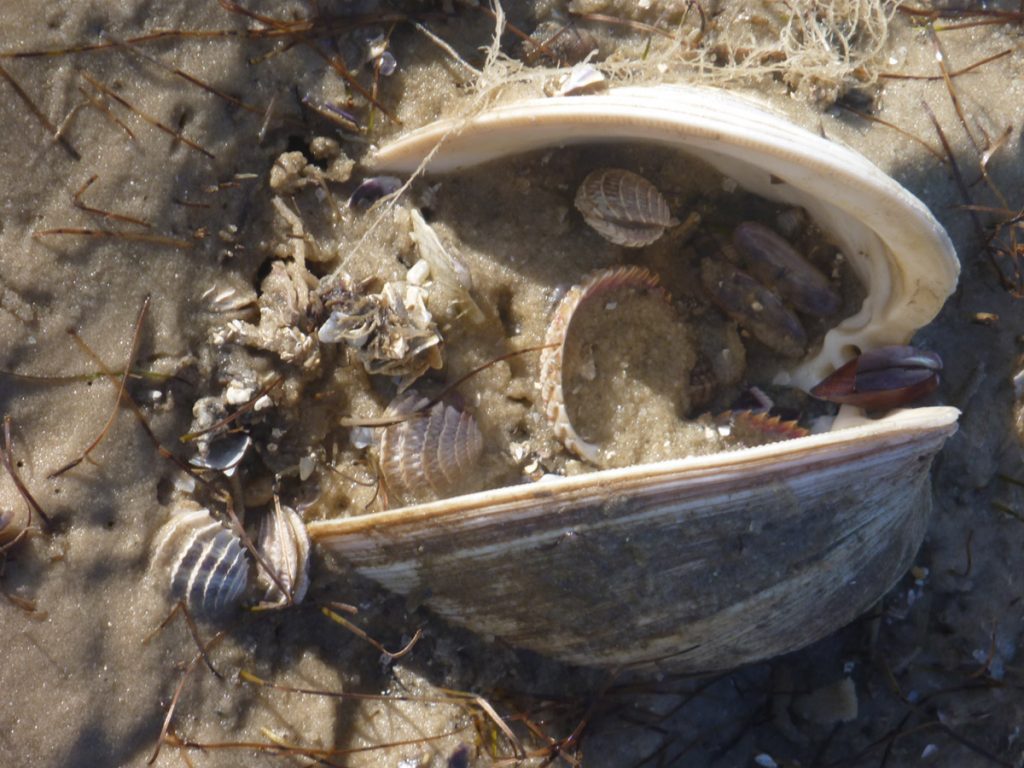
Tanya Rogers tested the survivorship and causes of death of clams on Bay Mouth Bar by tethering baby quahog and sunray venus clams in various locations on the bar. Read more on Tanya’s experiment here.
Sunray venus (Macrocallista nimbosa)
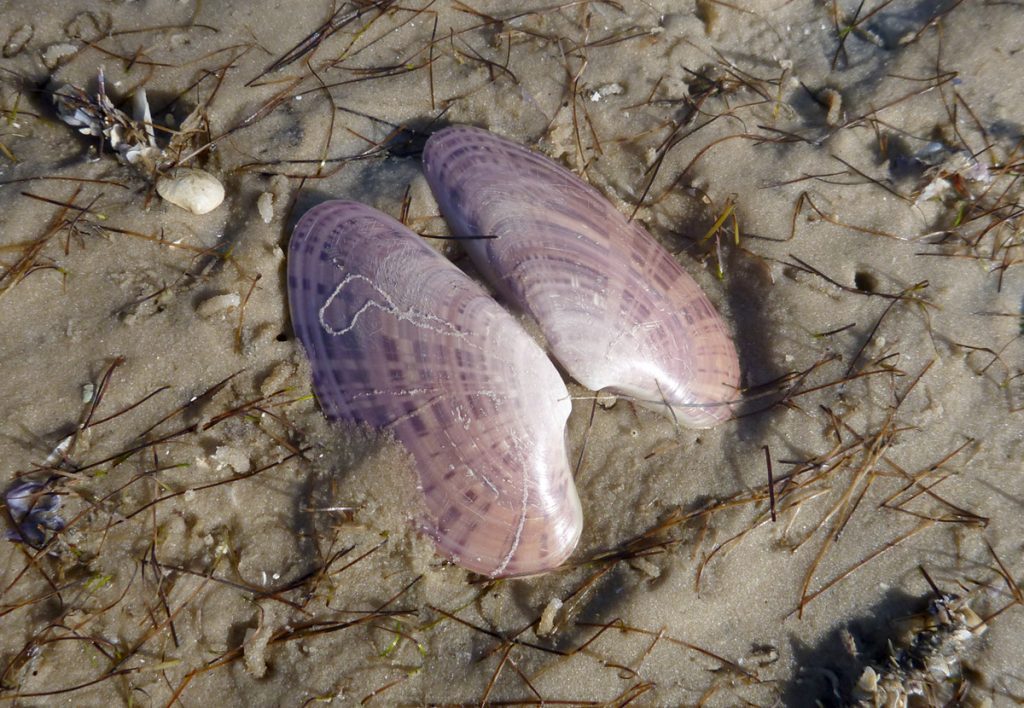
Tanya Rogers tested the survivorship and causes of death of clams on Bay Mouth Bar by tethering baby quahog and sunray venus clams in various locations on the bar. Read more on Tanya’s experiment here.
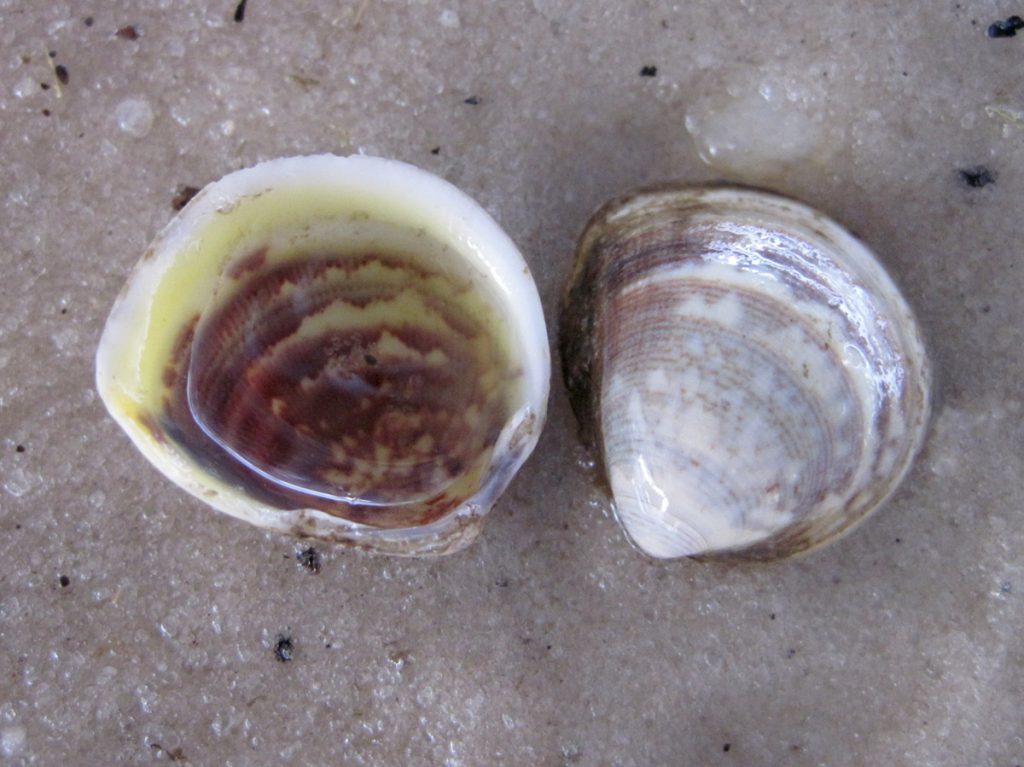
Yellow egg cockle (Laevicardium mortoni), also known as Morton’s egg cockle
Other Invertebrates
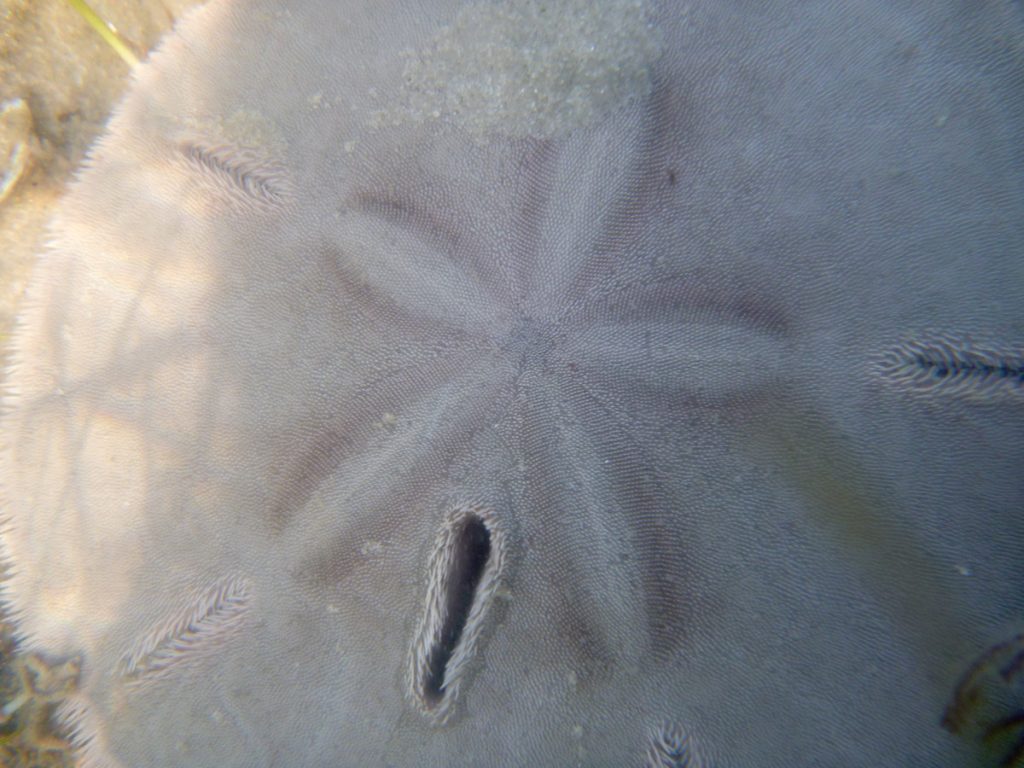
Keyhole sand dollar (Mellita quinquiesperforata), also known as five-slotted sand dollar
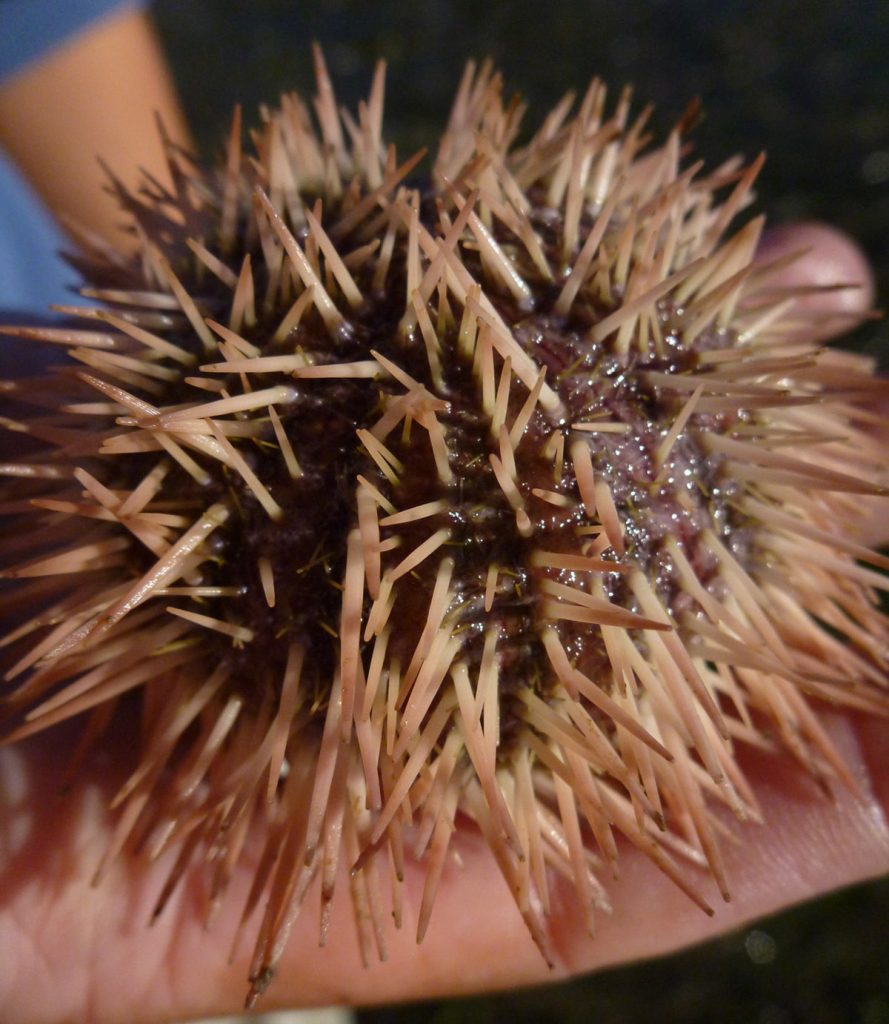
Sea urchin (phylum Echinodermata)
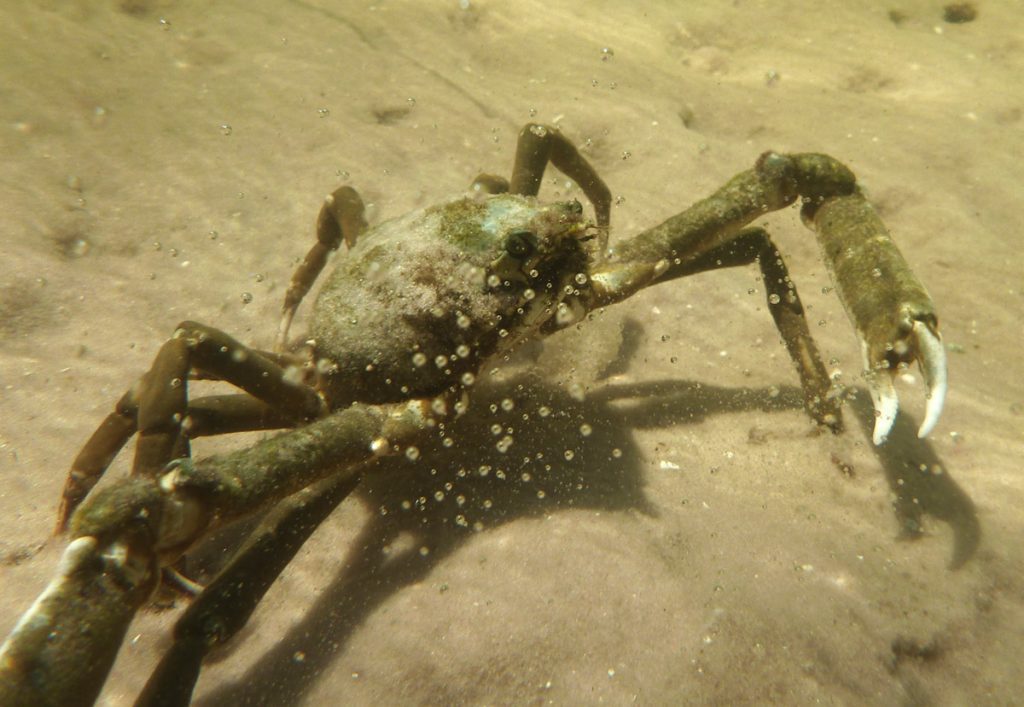
Spider crabs (Majoidea superfamily)
Tunicates (suphylum Tunicata)