
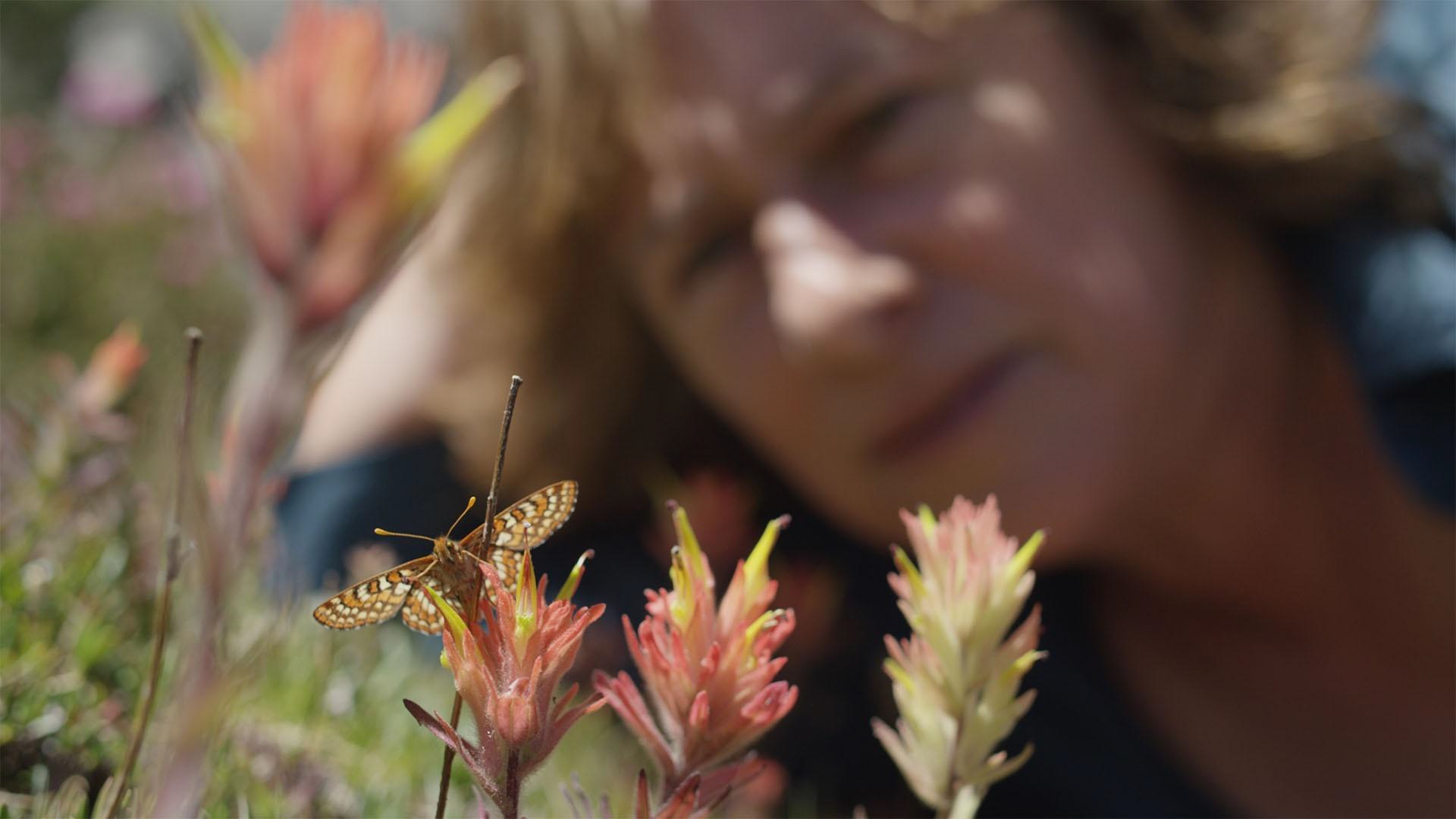
From Evolution Earth, “Follow the Butterflies: The Discovery of Climate Sentinels” reveals how butterflies can tell a powerful story about our planet. Biologist Camille Parmesan has discovered that the Edith Checkerspot butterfly, located within the Sierra Nevada mountain region, are living indicators that show us how the Earth is evolving. Through careful observation, researchers have noticed patterns that point directly to shifts in climate.
A new question presents itself: How can butterflies be indicators of climate change? Well, Parmesan found that these butterflies are extremely sensitive to temperature and environmental conditions. As the climate warms, the Edith Checkerspot butterfly populations are moving to cooler areas higher up within the Sierra Nevada mountain region. While the movement may seem insignificant, it provides evidence on how climate change is reshaping ecosystems.
Because butterflies are fragile, delicate animals, this migration is extremely valuable in how climate research is tied to their habitual survival. Their responses show how living organisms adapt, move, and struggle to survive in a rapidly changing world. As part of a global effort, Evolution Earth demonstrates how animals across the planet are adjusting to new conditions.
“Follow the Butterflies” , a resource for grades 9-12, encourages us to look closer at the environment. Something as simple as tracking butterflies can uncover complex changes within our natural world. Butterfly migration reminds us that climate change is not a distant issue, it is happening now, and it is affecting even the smallest creatures. Paying attention to these signals allows us to understand our impact on the Earth and take steps toward protecting ecosystems.
For this resource and others from the Evolution Earth series, click PBS Learning Media or https://florida.pbslearningmedia.org/resource/follow-butterflies-climate-sentinels-video/evolution-earth/
